G-01, Friends Residency · Warsan 4Monday–Saturday · 08:00–17:00

Managed residential building · Warsan 4, Dubai

Residential building facility management in Warsan 4.

A practical, resident-aware facility management approach focused on maintenance continuity, common-area care and clear follow-through for an occupied Dubai building.

Dubai & UAEPlanned and responsiveClear follow-through
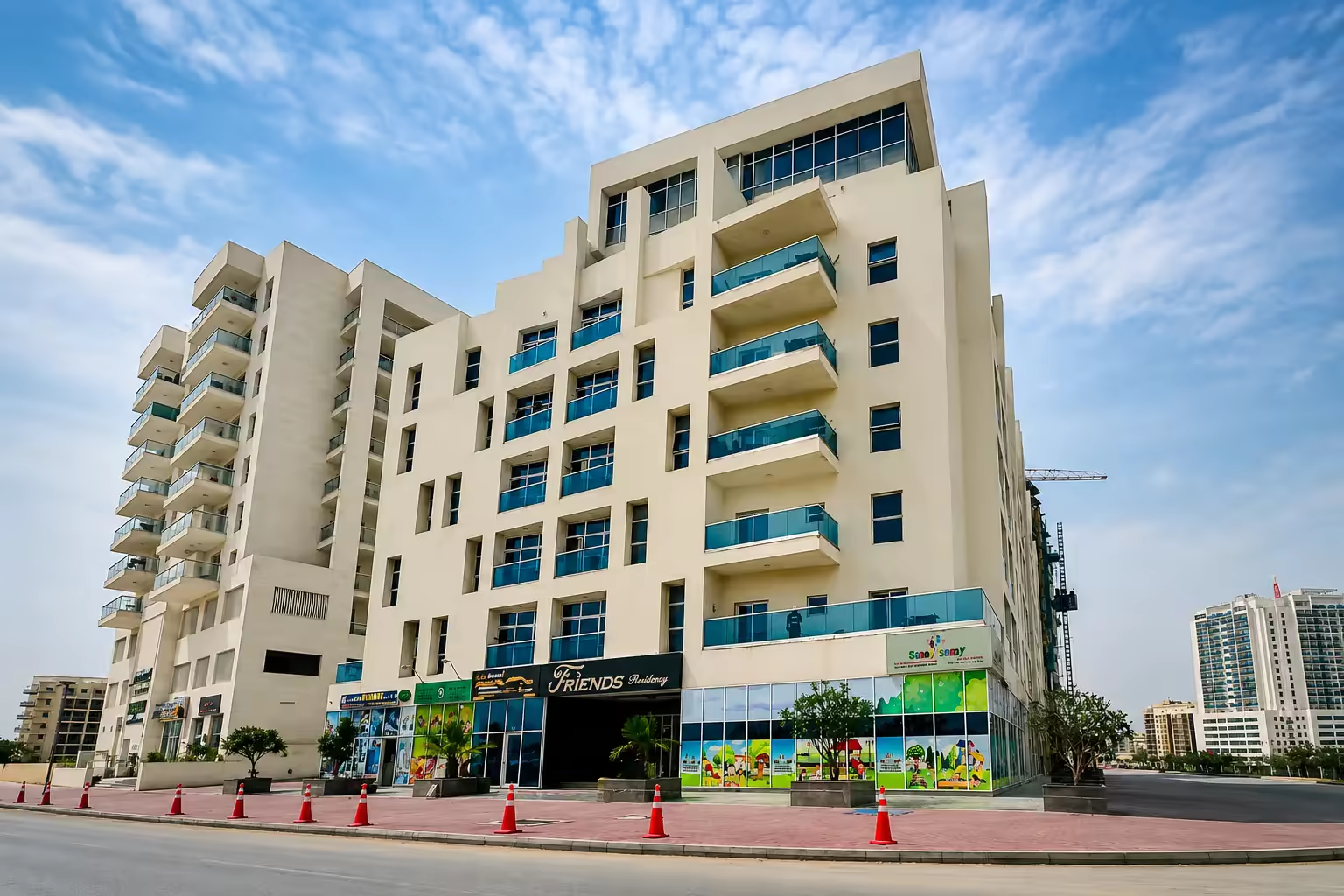
Property-first operations Friends Residency Building exterior in Dubai with the Friends Residency entrance and street frontage
Managed residential building · Warsan 4, DubaiDubai · UAE

Managed property profile

Facility support built around daily residential operations.

Friends Residency Building is an occupied residential property where reliable facility support depends on hundreds of small actions being handled consistently. A comfortable entrance, clean and usable common areas, working building services and clear maintenance follow-up may appear routine, but each outcome requires planning, responsibility and records. Friends Facility Management approaches the property as an operating environment rather than a collection of isolated repair requests.

The published profile explains how the building is supported without disclosing private resident, commercial or contract information. The emphasis is on the operating method: understand the requirement, assess its effect on residents and the asset, assign the right response, confirm completion and preserve a useful service history. This structure helps day-to-day issues receive attention while recurring concerns remain visible for longer-term decisions.

Because the property is occupied, maintenance planning must balance technical needs with access, timing, noise, safety and communication. Work is therefore considered in the context of the whole building. A minor observation in a corridor, plant area or service riser may be linked to a wider condition that deserves monitoring. Equally, not every observation needs immediate replacement. A documented, proportionate response supports better decisions and avoids unnecessary disruption.

Property environment
Occupied residential building
Public location
Warsan 4, Dubai, UAE
Management focus
Continuity, condition and resident experience
Service model
Planned maintenance with responsive coordination

Building in focus

See the property before exploring its operating story.

These location-specific views replace representative stock artwork and help owners, residents and service partners recognise the building context.

Friends Residency Building exterior in Dubai with the Friends Residency entrance and street frontage
Official property photographyFriends Residency Building
Front elevation and entrance of Friends Residency Building in Dubai
Property view 02
Street-level view of Friends Residency Building and its surrounding Dubai neighbourhood
Property view 03

Photography source: Friends Group media library ↗

How the building is supported

Four operating priorities guide the day-to-day approach.

The priorities keep resident experience, asset condition and accountable follow-through connected.

01

Resident-aware planning

Maintenance is coordinated around access, timing, safety and the practical effect on people living in the building.

02

Common-area care

Shared spaces are reviewed as part of the property experience, with presentation and condition followed together.

03

Visible follow-through

Open requirements need an owner, a status and evidence that the agreed action has been completed.

04

Useful maintenance history

Records help distinguish one-off defects from recurring patterns that may require a different decision.

Operating coverage

Published service scope

An approved public overview of the recurring support coordinated for this property.

01
Service responsibility

Building maintenance coordination

02
Service responsibility

Common-area support

03
Service responsibility

Preventive follow-up

04
Service responsibility

Service issue records

Building systems

Systems and operating areas

Key areas included in the property’s coordinated maintenance and follow-up routine.

01
Operating area

Common-area AC and ventilation observations

02
Operating area

Electrical and lighting maintenance coordination

03
Operating area

Plumbing, drainage and water-related follow-up

04
Operating area

Minor civil, painting and presentation requirements

05
Operating area

Shared-access and common-area condition reviews

06
Operating area

Service records, open actions and contractor follow-up

Accuracy and privacy note

Published details are limited to information approved for public use. Resident identities, private requests, equipment quantities, contract values and confidential client information are not disclosed. The current written agreement governs exact service scope and responsibilities.

01

How daily building support is organised

A reliable operating day begins with clarity. Requests should identify the location, observed symptom, urgency and person who can provide access or further information. Vague descriptions often lead to repeated visits, so the first step is to turn the concern into a usable maintenance brief. Photographs, recent service history and any change in the issue help the team decide whether an initial inspection, direct minor repair or specialist assessment is appropriate.

Priorities are based on impact, not simply the order in which messages arrive. A concern involving safety, active water escape, loss of an essential shared service or risk of further damage requires quicker escalation than a planned decorative item. Lower-risk work still needs a target and owner; otherwise small defects accumulate and affect the building experience. A simple priority model helps urgent work move quickly while planned items remain visible rather than forgotten.

Completion also means more than receiving a verbal update. A useful close-out records what was found, what was done, whether the issue is fully resolved and whether another action is recommended. Where a temporary measure is used, the permanent follow-up remains open. This discipline is important in an occupied building because repeated symptoms may otherwise be treated as unrelated events.

02

Preventive attention and asset condition

Preventive maintenance is most effective when it reflects the actual property. The starting point is a practical list of maintainable systems and common-area assets, supported by sensible inspection or service intervals. Frequencies should consider equipment guidance, observed condition, usage, local environmental exposure and service history. The objective is not to create paperwork for its own sake; it is to identify change early enough to plan a proportionate response.

At Friends Residency Building, property condition is considered across technical systems and visible building fabric. Cooling performance, lighting, plumbing observations, doors, finishes and shared areas contribute to the daily experience in different ways. Tracking these categories together allows work to be grouped logically, reduces unnecessary access and helps the owner understand where recurring attention is being spent.

A preventive visit should create an outcome that someone can act on. A checklist marked complete without observations has limited value. Useful records identify the asset or location, condition seen, service completed, readings or photographs where appropriate, and the next recommended step. That information becomes the basis for repair-versus-replacement discussions and future budget planning.

03

Resident experience and communication

Facility management is often experienced through communication before it is experienced through engineering. Residents want to know whether a concern has been understood, when access may be required and what happens next. Clear, realistic updates are more valuable than promises that cannot be confirmed. When work affects a shared area or may create noise, dust or temporary inconvenience, early notice helps the building operate with less friction.

Communication should also protect privacy. Public notices and operational updates do not need to identify individual residents or disclose private circumstances. The message should focus on the affected area, expected timing, safety guidance and contact route. Internally, the work record can retain the detail required for follow-up under appropriate access controls.

After completion, a short confirmation closes the loop. For recurring or technically complex matters, follow-up may include monitoring rather than an immediate declaration that the issue is permanently solved. This honest approach supports trust and gives the team time to verify performance under normal building use.

04

Owner visibility and long-term decisions

Owners need a view that is more useful than a list of messages. Maintenance information should show completed work, open priorities, repeat concerns, specialist recommendations and items that may affect future expenditure. Grouping information by system or building area helps reveal patterns. Several low-cost visits to the same component, for example, may justify a deeper technical assessment even if each individual repair appeared minor.

The building record also supports continuity when staff or contractors change. Decisions should not depend entirely on one person remembering what happened months earlier. Service reports, photographs, quotations and approvals linked to a clear issue reference provide a practical history. This is especially important for hidden services where the visible symptom may disappear before the root cause is fully understood.

Long-term property care requires judgement. Not every ageing item needs immediate replacement, and not every repeated repair remains economical. Condition, operational importance, availability of parts, disruption risk and expected service life all influence the decision. Friends Facility Management supports that discussion with organised observations and follow-through; final technical and commercial decisions remain subject to the agreed scope and owner approval.
Managed-property workflow

A clear cycle from observation to recorded outcome.

The exact scope, timing and commercial terms are confirmed in writing before work begins.

01

Understand

We confirm the property, requirement, urgency and the right contact person.

02

Assess

We review available information and decide whether a site visit or specialist input is needed.

03

Coordinate

The agreed work is assigned, scheduled and followed through with clear responsibility.

04

Record

The outcome, observations and recommended next step are documented for future decisions.

Property questions

Clear answers about this managed building.

Public information remains intentionally limited to approved operational context.

Is Friends Residency Building actively managed by Friends Facility Management?

Yes. Friends Residency Building is presented as a managed residential property within the current portfolio. Public information is limited to approved operational context.

What type of facility support is provided?

The public scope includes building maintenance coordination, common-area support, preventive follow-up and organised service records. Exact contractual responsibilities are confirmed in the current written agreement.

Does the public page include resident or contract information?

No. Resident identities, private requests, commercial terms, equipment quantities and confidential client information are not published.

Can a similar residential building request a quotation?

Yes. Building owners and property managers can share the property type, location, systems and required scope through the quotation page for review.