
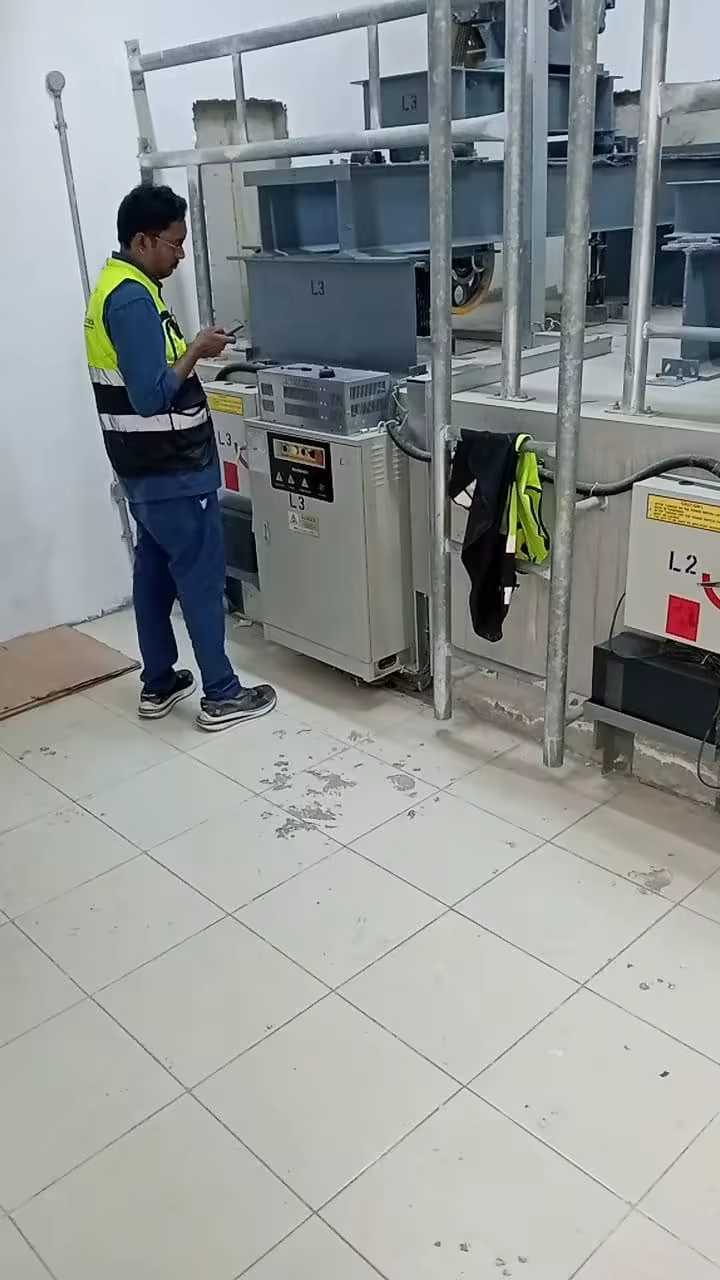
Keep mechanical, electrical and plumbing tasks connected through clear roles, work sequences, access arrangements and useful handovers.
MEP means mechanical, electrical and plumbing. In an occupied building, these services do not exist as separate lines in a quotation only. They support the same rooms, occupants and daily activities. A reported problem can involve more than one provider, and work by one team can create an access or follow-up requirement for another. Coordination keeps the whole requirement visible.
Building a practical maintenance process
This guide explains MEP coordination for Dubai building owners and property teams. It focuses on information, responsibility and work sequence, not technical repair methods. Friends Facilities Management offers [MEP maintenance coordination](/services/mep-maintenance) within an agreed scope. The aim is a clear path from a reported requirement to the appropriate assessment, accepted work and useful record of the outcome.
## Begin with the building requirement
Turning observations into action
Describe the affected location and what has been observed before deciding which trade must solve it. A visible condition may need more than one kind of assessment. Record facts the team already knows and mark uncertainty honestly. This gives the responsible provider a useful starting point without turning a first message into an unsupported diagnosis that later teams may follow uncritically.
Ask what the property needs to achieve. Is the requirement a defined fault assessment, planned attention, coordination of several recommendations or completion of an existing work package? Those are different tasks. A short outcome statement helps the team choose the next step and prevents a broad MEP label from hiding what the owner is actually asking the providers to assess or deliver.
### Separate the reported effect from the suspected cause
Record that a room is affected or a symptom was noticed, then distinguish any suspected explanation. Do not delete a reporter's useful context, but do not present it as a confirmed finding either. Technical conclusions should be attributed to the competent assessment that supports them. A clear distinction protects later decisions from becoming a chain of assumptions copied between messages.
## Map responsibilities before booking several visits
Identify the property coordinator, relevant providers, access contact and approving role. The coordinator does not automatically replace each specialist's technical responsibility. Make clear who assesses, who proposes work, who authorises it and who records the combined outcome. One accountable route can connect several providers without pretending that one general attendance covers every discipline or gives every person the same authority.
Check existing service boundaries and warranties where relevant. Some equipment or activities may already sit with a specialist provider or another responsible party. Do not instruct a new team into that scope without understanding the arrangement. The [integrated facility management service](/services/integrated-facility-management) is a route to discuss a connected operating view, with the actual responsibilities confirmed in writing.
### Use a simple responsibility note
For a multi-provider issue, write the task, responsible role, dependency and next action. Keep it practical enough to read during a coordination call. If two parties both believe the other must act first, identify the missing assessment or decision rather than repeatedly booking attendance. A short responsibility note can prevent a long delay caused by a boundary that nobody has explained.
## Gather the records that support assessment
Collect relevant drawings, asset references, previous findings and work history that the property already holds. Ask providers what information is needed for the actual assessment. Do not circulate every file in the building archive simply because it is available. The useful set explains the location, equipment and earlier work without forcing a specialist to search through unrelated documents before starting.
Mark outdated or uncertain information. A drawing may not reflect later alterations, and an equipment name may differ between records. Ask the competent team to verify what matters to its task. Our [asset register guide](/blog/facility-asset-register-uae) discusses the wider record structure. MEP coordination uses those records to support a specific requirement; it does not make an old drawing accurate by attaching it to an email.
## Agree the sequence of work
Ask the involved providers to explain which activities depend on earlier findings or work. A later task should not be booked simply because there is an empty calendar slot if the condition needed for it is not ready. Keep the sequence tied to the competent recommendations and accepted scope. The owner's role is to ensure that dependencies and approvals are visible, not to design technical methods.
For example, a visible finish may need a separate restoration task after another issue is appropriately resolved. Record who confirms readiness for that handover. Do not assume that completing the first visit automatically makes the next trade ready to start. The [civil and handyman service](/services/civil-handyman-services) can be discussed for an agreed follow-up, with the actual scope assessed rather than guessed from the appearance of the damage.
### Distinguish parallel work from dependent work
Some administrative actions can proceed together, such as arranging access and collecting existing records. Other activities depend on a technical finding, an approval or a completed stage. Label those differences. A plan that lists every task on the same day may look efficient while creating avoidable conflicts. Ask the providers to confirm what can genuinely proceed together under the site's arrangements.
## Coordinate access around occupied use
Identify which spaces the work may affect and who can arrange access. Occupied units, shared service areas and commercial spaces can have different requirements. Agree the practical contact route, permitted windows and communication before attendance. Do not treat a small reported fault as permission to enter every related area without the property's required arrangements and authorisation.
Where the providers identify a need for temporary controls, service interruption or other site arrangements, coordinate those through the established process. This article does not prescribe isolation, electrical work or other technical procedures. Keep those decisions with competent responsible parties. The coordination record should state who will confirm the arrangement, communicate it and approve the return to ordinary use when appropriate.
## Keep a common reference across providers
Use one property issue reference and link each provider's quotation, visit or work-order number to it. Different companies may keep their own systems, but the owner still needs a combined view. This makes it easier to see whether the original requirement is complete or only one part has been attended. A shared reference is a connection between records, not a demand that every provider use identical software.
Keep notes of material decisions and changed instructions. If a provider revises its recommendation after inspection, retain the earlier version with the updated finding and approval route. Do not silently replace the history so the sequence becomes impossible to follow. A useful combined record explains why the plan changed and what the responsible parties agreed to do next.
### Avoid a handover that exists only in conversation
Verbal coordination may be necessary during a visit, but material handovers should be recorded through the agreed route. Identify the completed stage, remaining requirement and receiving role. A message saying “ready” is less useful than a note explaining what is ready and what the next provider is being asked to do. Keep the language factual and proportionate to the actual task.
## Compare quotations against the same requirement
Several MEP proposals can contain overlapping or missing activities. Ask each provider to explain its included work, assumptions and dependencies. Do not add the totals without checking whether the same task appears twice or a necessary handover appears nowhere. The aim is a connected scope in which the owner can understand both the combined requirement and each party's boundary.
Separate assessment from instructed corrective work where that distinction applies. A finding may lead to a recommendation that needs further information or approval. Keep that decision visible rather than treating the report as automatic authority to undertake everything it mentions. Clear quotations support a sound next decision; they should not disguise uncertainty with an unqualified promise of a complete solution before assessment.
## Keep occupant communication clear
Tell affected occupants what they need to know about access, timing and the contact route. Avoid sending several conflicting updates from different teams. The coordinator can gather the current agreed plan and communicate a plain version through the property's process. Technical detail belongs in the work record where needed; the occupant message should focus on the practical effect and required action.
If a stage changes, update the relevant people rather than leaving an earlier notice in circulation. Explain whether the next attendance, access window or expected outcome has changed. Do not claim resolution while work is still under assessment. Honest updates can be brief. They are more useful than a reassuring phrase that leaves the reporter expecting a completed repair when another decision remains open.
## Close the combined issue carefully
Review the original requirement against the completed activities and recorded outcomes. Check whether technical work, cleaning, finish restoration or a separate recommendation remains. Each included task should have an accountable result or next action. One provider's completion note may be correct for its scope while the property's overall issue is still incomplete. Keep both views visible instead of forcing one status to describe them all.
Ask for the evidence agreed for the task, such as appropriate findings, work notes or photographs. Do not invent a universal test or certificate requirement in a generic handover checklist. The responsible providers should identify the technical evidence applicable to their work. The owner needs enough clarity to understand what was done, what was assessed and which further decisions remain.
## Review repeated coordination problems
Look for requirements that repeatedly stall between trades, approvals or access arrangements. Ask what the process is missing. It may need a clearer responsibility boundary, an updated record or a named handover contact. Do not assume more meetings will solve a poorly defined dependency. Choose a practical change and check whether the next similar issue moves more clearly through the process.
Keep the review focused on evidence rather than blame. If two providers describe different views of a condition, ask them to explain their findings and any further assessment needed. The property team should not choose a technical conclusion simply because it sounds more confident. A transparent record of uncertainty and the next competent review is better than an unsupported decision made to close a spreadsheet line.
## An illustrative coordination example
Imagine a reported condition affects a shared room and may involve more than one building service. Reception records the location and observation. The coordinator gathers relevant history and arranges the appropriate assessment. The providers explain their findings and identify which work depends on another stage. The owner then sees a clear proposal, approval route and sequence instead of separate requests that cannot be compared.
After the accepted work, the record links each attendance to its outcome. Any separate cleaning or finish task remains visible until handed over. Occupants receive one practical update, and the next review can identify whether a recommendation is still awaiting a decision. This is a process example, not a claim about a specific property or a technical diagnosis of a particular symptom.
Use the [quotation request page](/request-a-quote) to describe a multi-service requirement, known findings, affected areas and existing providers. Ask for the proposed coordination scope and exclusions. Good MEP coordination keeps information, responsibilities and decisions connected while leaving technical work with the competent parties responsible for it.
## Make the service arrangement easy to understand
A service label is a starting point, not a complete description of what a property will receive. Ask for the included areas, activities, reporting and exclusions in writing. Keep the language clear enough for the person arranging access and the person approving payment to understand the same scope. If a requirement is outside the accepted service, identify the next assessment or approval rather than silently adding it to a routine visit.
### Separate an observation from a technical conclusion
An owner or receptionist can provide a useful description without deciding the cause of a fault. Record what was seen, where it was noticed and when it occurred. Let a competent provider assess the technical response. A familiar symptom does not prove that the same repair is appropriate each time. Clear information is helpful; asking someone to open equipment or improvise a test simply to improve a report is not a suitable administrative shortcut.
Where a situation may be urgent, use the property's established emergency and escalation arrangements. This guide is about management and communication, not a substitute for a site-specific safety procedure or professional assessment. Do not wait for the next ordinary review to raise a concern that needs immediate attention. The responsible team should decide what controls, specialist support and communication are appropriate for the actual circumstances.
### Give every next action an owner
An open requirement should have a named responsible role and an understandable next step. That might be arranging access, obtaining a quotation, reviewing findings or confirming completion. Avoid leaving a task at “with the team” when nobody knows who will respond. Responsibility for coordinating the next action is different from permission to undertake technical work. Keep those roles separate so the record does not imply authority that has not been given.
Use a review date that matches the next decision, rather than copying a deadline into every record. If an action is waiting for information, say what is missing and who will obtain it. If it is waiting for approval, identify the approving role. This makes a follow-up useful. Sending the same reminder repeatedly without resolving the dependency can create activity while leaving the underlying requirement unchanged.
### Keep price and scope connected
Ask whether a quotation includes labour, materials, access, specialist attendance, reporting and follow-up. Check any limits or exclusions before comparing totals. Two proposals may use the same service name while covering different work. A lower number is not a meaningful saving if a necessary part of the requirement has been left out. Ask the providers to clarify differences rather than filling the gaps with assumptions.
For an ongoing service, record how additional work is assessed and authorised. For a defined task, record what would cause the provider to stop and seek a revised instruction. The aim is not to remove every uncertainty before assessment. It is to make the decision route clear when new information appears. Keep the accepted proposal and any later variation together so the final record explains both the work and the authority for it.
### Retain useful records without collecting unnecessary information
Connect the report, quotation, visit note and outcome using a consistent reference. Keep the documents accessible to authorised people who need them. Avoid storing the only copy on one person's phone. When staff or providers change, the property should still be able to understand what was requested, what was agreed and what remains open. A modest, consistent system is more useful than a complicated one that nobody maintains.
Photographs should show the relevant location and condition without exposing occupants' private belongings, documents or personal details unnecessarily. Share them through the agreed work channel and limit access appropriately. Keep factual notes separate from guesses and opinions. The purpose of a property record is to support a sound next decision, not to gather as much information as possible or turn every small issue into a large report.
## Frequently asked questions
### 1. What does MEP coordination mean?
It connects mechanical, electrical and plumbing requirements through clear information, responsibility and work sequence. It does not automatically mean one provider performs every specialist task. The agreed scope should explain who assesses, who works, who approves and who records the combined outcome so the property can understand what remains open across several related activities.
### 2. Does a coordinator replace specialist contractors?
No. Coordination and technical responsibility are different roles. Specialists remain responsible for their appropriate assessment and work within the accepted arrangement. The coordinator keeps dependencies, communication and records connected. Confirm the actual boundaries in writing rather than assuming a general MEP label includes every trade, test, approval or specialist attendance a building may require.
### 3. What should an owner provide first?
Share the location, observed condition, relevant work history, known assets and practical access information. Mark uncertainty honestly. Ask providers what further records they need for the assessment. Avoid circulating unrelated files or treating a first guess as a confirmed cause. A clear brief helps the team choose a suitable next step without inventing a diagnosis.
### 4. Why does the work sequence matter?
Some activities depend on findings, approvals or a completed earlier stage. Booking them in the wrong order can create repeat visits or unfinished work. Ask the responsible providers to explain those dependencies. The property team should record who confirms readiness for the next stage instead of assuming that a visit automatically completes every condition needed for a handover.
### 5. How can records from different companies be connected?
Use one property issue reference and link each provider's quotation, report or work-order reference to it. Keep material decisions and outcomes together. The companies do not need identical software for the owner to maintain a combined view. Consistent references help later reviewers understand which work belongs to the same requirement and which tasks remain separate.
### 6. Are cleaning and finish repairs always included?
Only rely on the accepted scope. Technical attendance may leave separate cleaning or reinstatement tasks. Record who assesses them, who authorises them and who confirms readiness for the next stage. Do not close the overall issue because one provider completed its part while another necessary activity has no responsible role or instruction.
### 7. Who tells occupants about planned work?
Agree one communication route through the property process. Several providers can contribute information, but occupants need a clear current message about access, timing and required action. Update that message when the arrangement changes. Do not leave an earlier notice in use or imply the work is resolved while another assessment or approval is still needed.
### 8. How should overlapping quotations be reviewed?
Compare included activities, assumptions, dependencies and exclusions against the same requirement. Check whether work is duplicated or missing between proposals. Ask the providers to clarify the boundaries before authorising the combined package. A total price alone cannot show whether several quotations form a complete and sensible sequence for the property's actual issue.
### 9. What evidence should a handover contain?
Use evidence appropriate to the task and agreed scope. It should explain completed activity, relevant findings, outcome and remaining recommendations. The responsible providers should identify applicable technical requirements. Avoid treating a generic photograph or signature as proof of every possible result. The owner needs an understandable record that supports acceptance and the next decision.
### 10. How can a property request coordination support?
Describe the affected areas, observations, existing providers, available findings and desired outcome. Explain access constraints and any decisions already made. Ask the proposal to define coordination responsibilities and exclusions. A focused brief helps the team explain a practical service arrangement rather than promising a complete technical answer before the relevant assessment has taken place.
Next step
Every property requires a plan suited to its equipment, usage and current condition. A site review and accurate scope should come before any fixed maintenance commitment.
This article provides general guidance and does not replace a property inspection, formal technical advice or an accepted service scope.